
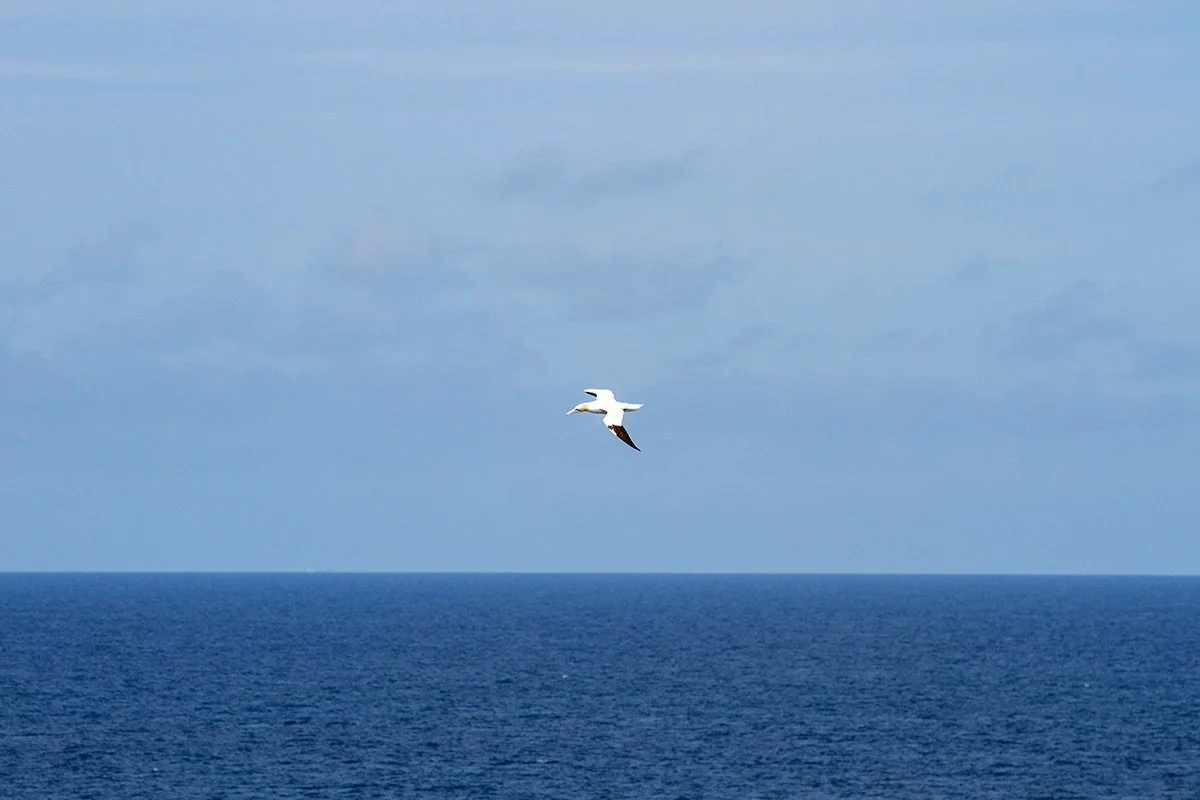
Northern Gannet over the sea off Cornwall
Over the autumn and winter, Cornwall probably gets more feathered visitors than human ones. For anyone who loves birds, these are some of the most rewarding months of the year to stay with us in Port Isaac.
From September onwards, the swallows that have spent summer with us gather on the wires and set off for Africa. In their place come birds from the north escaping the Arctic winter: ducks, plovers, waders and flocks of thrushes.
Cornwall has a habit of hosting the unexpected, too. Jutting out into the Atlantic, it is often the first landfall for many migrating birds, and our mild maritime climate makes it a welcoming place to spend the winter. Easterly winds can also blow rarer species off course, and the fast-moving Atlantic weather systems occasionally carry birds all the way from North America.
What makes Port Isaac such a good base for bird spotting is how much variety lies within easy reach. Step out of the door and you're on a wild stretch of coast designated an Area of Outstanding Natural Beauty, with dramatic sea cliffs either side. Drive half an hour inland and you're on the open tors of Bodmin Moor. And just a short hop down the road lies the Camel Estuary and the wetland reserves at Walmsley Sanctuary and Middle Amble. Few places pack so many habitats into such a small area.
Sea Birds On The Port Isaac Coast
You don't need to go far for your first sightings. The cliffs and coves around Port Isaac are busy with sea birds all through the colder months, and a gentle walk along the coast path is often all it takes.
Great black-backed, lesser black-backed and herring gulls are a constant presence around Port Isaac, joined by fulmars, shags and kittiwakes. Look down at the pebbly shoreline and you may spot small waders such as turnstones picking their way along the tideline. Offshore you might spot bright-white gannets diving for their dinner.
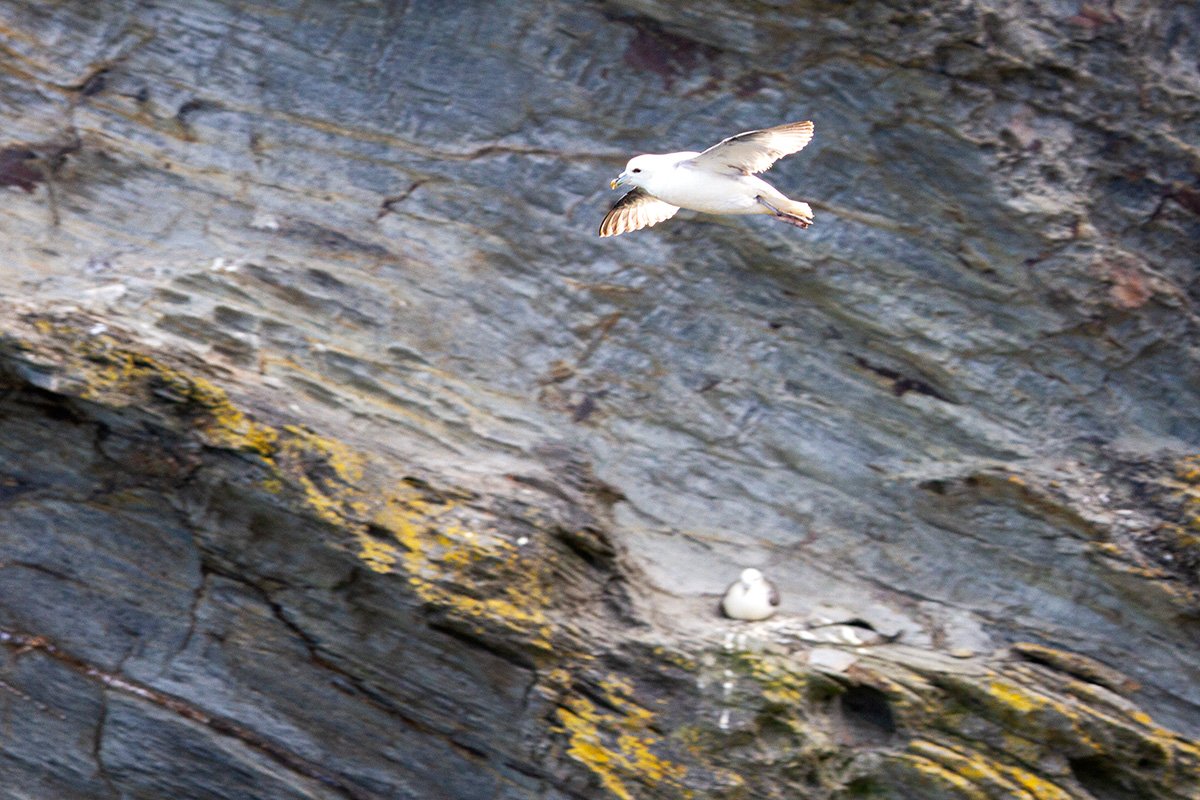
Fulmars gliding around the cliffs at Port Gaverne
Head west to Pentire Head near Polzeath, the western-most edge of Port Isaac Bay and a Site of Special Scientific Interest, and the craggy north-facing cliffs and offshore islands come into their own. Natural England's assessment of the Pentire Peninsula records raven and peregrine falcon here, with peregrines known to breed at The Rumps. Kestrels hunt the clifftops, while rock pipits and stonechats flit among the gorse and rocks.
While you're scanning the sea, keep your binoculars handy for something bigger. In recent winters large whales, including fin and humpback whales, have been seen from the clifftops.
Bodmin Moor
Around half an hour's drive inland, Bodmin Moor offers a completely different kind of birdwatching experience: big skies, open moorland and one of the great wildlife spectacles of the British winter.
Starling Murmurations at Rough Tor
From mid-October until early February, thousands of starlings gather over the conifers near Rough Tor at dusk, twisting and turning in vast, fluid shapes before settling to roost.
There's a car park at the foot of Rough Tor, so you can watch from beside the car or wander a little way onto the moor, however on clear winter afternoons it can get busy. The display tends to be at its most dramatic in December and January, when birds arriving from Europe swell the resident flocks. Still, dry evenings after a sunny day are best, and around the winter solstice the show can start as early as 4pm. We've written a full guide in our article Murmurations on the Moors.

The starling murmuration on Bodmin Moor, by Ben Spicer
Reservoirs and Open Moorland
The northern edge of the moor, around Crowdy Reservoir and Davidstow Airfield near Camelford, is well worth a morning of its own. Birdwatchers at Crowdy have recorded a ringtail hen harrier, golden plover and flocks of lapwing, as well as goosander, teal, tufted duck, raven and stonechat, and there's a hide overlooking the water.
You can often spot golden plover, lapwing and meadow pipits at Davidstow Airfield, and further south, goosander, great crested grebe and flocks of fieldfare and redwing have been seen at Colliford Lake as well as the 'winter thrushes' that Cornwall Wildlife Trust notes arrive each year from Iceland and Scandinavia.
The Camel Estuary
A short drive from Port Isaac, the Camel Estuary between Wadebridge and Padstow (along the Camel Trail bike path) comes alive in autumn and winter. This is probably one of the best places to witness the autumn migration in Cornwall, with big flocks of waders pausing to refuel on their way south.
Cornwall Bird Watching & Preservation Society (CBWPS) conducted a count along the estuary from Wadebridge to Padstow on a single day in early November last year and logged more than 40 species. Among them were curlew, redshank, oystercatchers, black-tailed godwits, greenshank, dunlin ringed plover, wigeon, goosander, little grebes, little egrets and even some kingfishers.
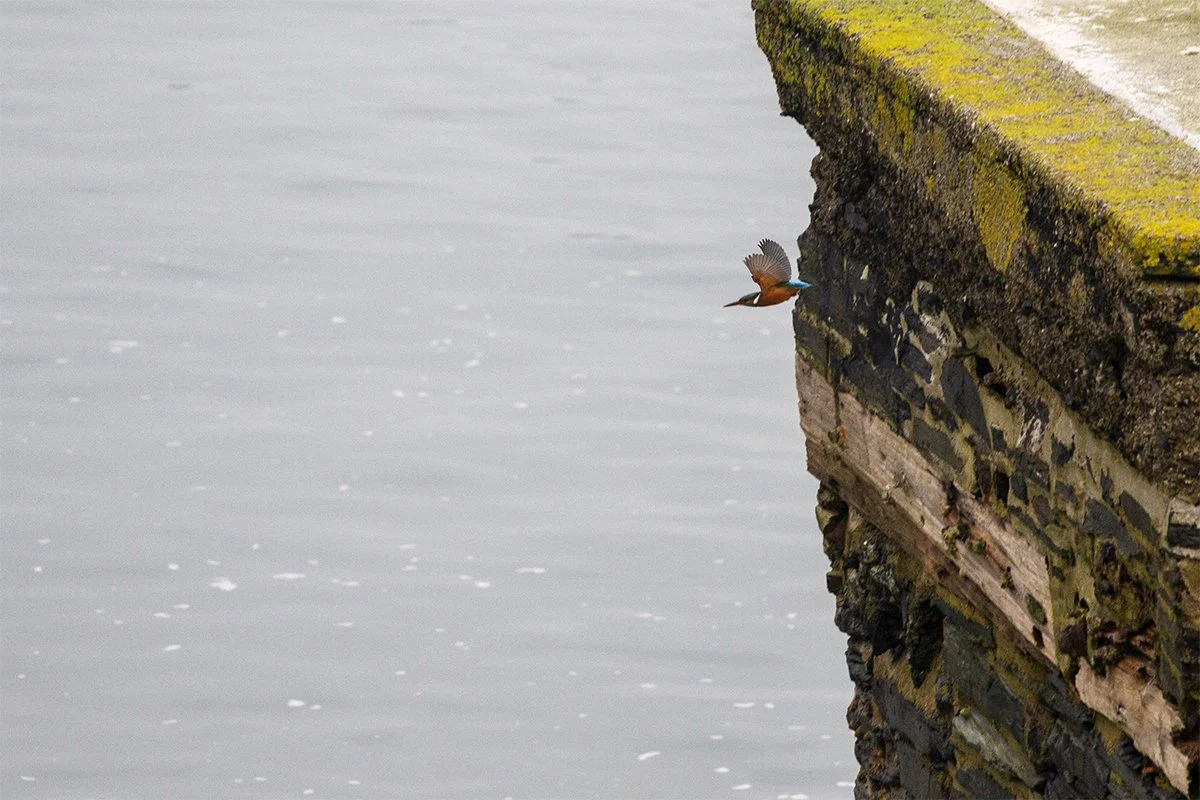
Kingfisher on the Camel Estuary
Walmsley Sanctuary and Middle Amble
Tucked beside the River Amble where it meets the Camel on its northern bank, Walmsley Sanctuary is one of the top sites in Cornwall for birding, and it sits right off the B3314 main road between Wadebridge and Port Isaac.
Walmsley was the first shooting-free sanctuary of its kind in the UK. The Cornwall Bird Watching and Preservation Society (CBWPS) bought the land in 1939 with a legacy from Dr Robert Garrett Walmsley, on condition that it became a sanctuary for migrating waders. The Society has cared for it ever since.
What You Might See
Winter sightings from CBWPS members report wigeon, teal, pintail, shoveler, gadwall and tufted duck on the pools, with flocks of curlew, black-tailed godwit, lapwing and snipe. Marsh harriers, sparrowhawks and kestrels hunt over the marsh, and kingfishers and little egrets are regular. Scarcer visitors such as whooper swan, spoonbill and barnacle goose turn up from time to time.
Visiting The Hides
The reserve is too sensitive to walk on, so all viewing is from the hides. There is good news this autumn, too: a brand-new hide is nearing completion,expected to be open for November, along with a new footbridge and entrance gate in place of the rickety stile.
Parking: use the lay-bys on the Wadebridge side of Trewornan Bridge (SW987742), then cross the bridge with care and follow the public footpath through the trees and across the field.
Tower hide: members only, opened with a key costing £8 from the CBWPS online shop. Allow ten days for delivery, so order before you travel.
Not a member? You can hire a key from the voluntary warden for £5 a day. Email walmsley_warden@cbwps.org.uk at least the day before.
Shooting days: Wildfowlers shoot on the open estuary on Tuesdays, Thursdays and Saturdays between September and February. For a quieter visit, we'd suggest planning around those days.
Middle Amble Marsh
Just upstream, Middle Amble Marsh is CBWPS's newest reserve, an extension of Walmsley jointly owned with Cornwall Wildlife Trust. Park in the main village car park in Chapel Amble and follow the lane towards Lower Amble to reach the footpath. The members' hide is about 75 metres along the track, and if you become a CBWPS member you can get the access code from the members' area. It really is a marsh, so wellies are a must!
Joining CBWPS
If you're planning to visit Walmsley or Middle Amble, joining CBWPS is well worth it, and it helps fund the Society's conservation work across the county. Membership costs £20 for the year (Senior citizen membership is £17, or £20 for senior citizen family membership). Members receive the quarterly newsletter Palores and the annual Birds in Cornwall report, and can buy the tower hide key for an additional £8. You can join CBWPS online here.
Planning Your Birdwatching Break
A few tips to make the most of a Bird-Spotting focussed stay in Port Isaac:
Check before you go. The CBWPS Recent Sightings page is regularly updated by members and is a great way to see what's around.
Make the most of the light. Days are short in winter, so plan the coast or estuary for the morning and save Rough Tor for dusk.
Wrap up with warm layers and take a flask. Pack wellies, too!
Expect company in the hides now and then. CBWPS occasionally hosts educational groups in the Walmsley hides. Members can still use them, but seats may be scarce.
After a day on the moor or in the hides, there's nothing better than warming up by the fire in a characterful Cornish pub. Our guide to cosy pubs for the colder months features some of our favourites.
With the coast on the doorstep and the moor and estuary just a short drive away, Port Isaac makes a wonderful base for an autumn or winter birdwatching break. Take a look at our short breaks or click browse our properties below to find your perfect winter retreat.